2026-08-29 ·
Tankless Water Heater Repair in Mesa: Common Issues and Fixes
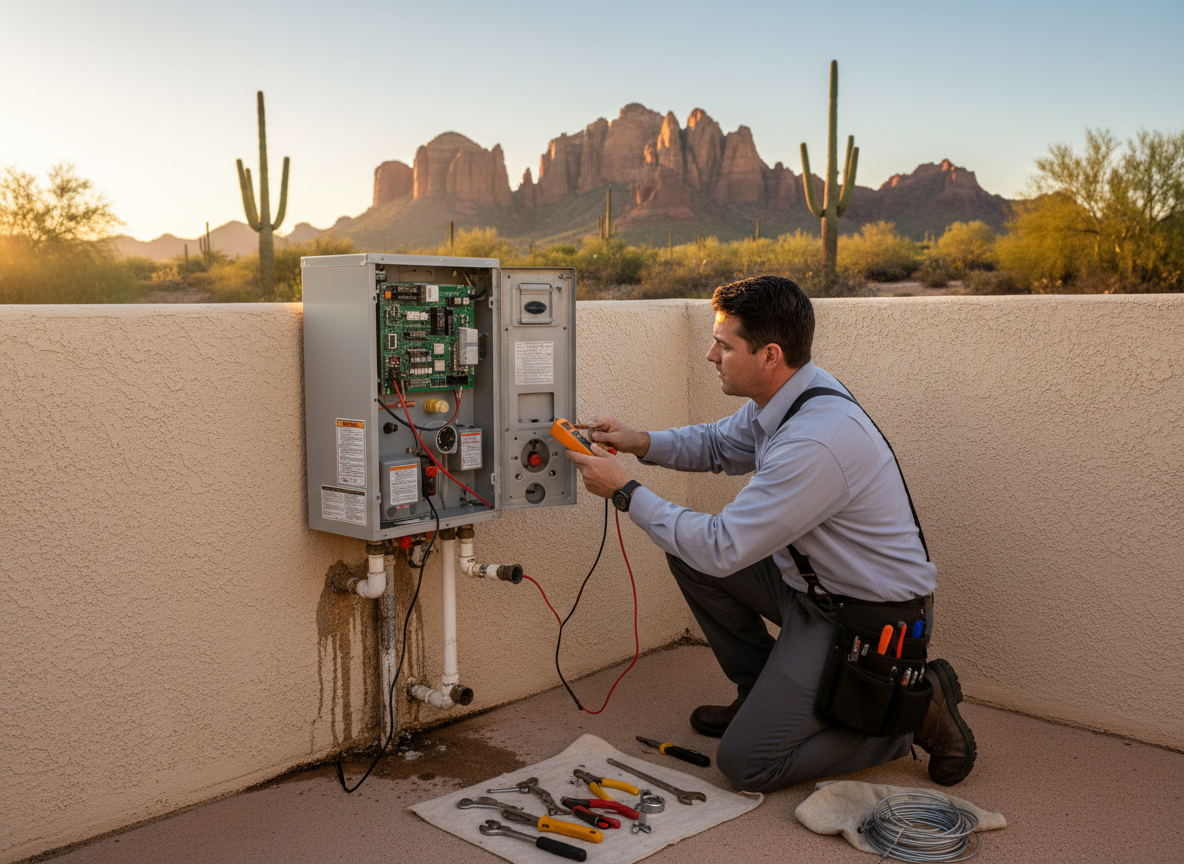
Tankless water heater repair in Mesa often starts with mineral scale blocking heat exchangers and flow sensors after 3–5 years of service in Maricopa County water. Homeowners notice reduced flow, error codes, or lukewarm water once summer temperatures push units past 110 °F ambient. These symptoms appear faster near the Superstition Mountains where groundwater carries higher dissolved solids than areas closer to Tempe.
Mineral Scale Buildup in Mesa Homes
Maricopa County water leaves behind calcium and magnesium deposits that coat the heat exchanger and restrict water flow. In neighborhoods such as Red Mountain and Superstition Springs, older single-family homes with 1990s plumbing see scale accumulate quickest because pipes already carry sediment. Technicians typically remove the front cover, flush the unit with a vinegar solution for 45–60 minutes, then check the inlet screen for debris. If the scale has already pitted the copper, replacement of the heat exchanger becomes necessary rather than simple flushing. Homeowners along Riverview Park often report the same issue recurring within two summers if they skip annual descaling.
Effects of Extreme Summer Heat on Components
Mesa’s 110-plus degree days force tankless units to work harder to keep incoming water at set temperature. The extra load shortens lifespan of the fan motor and igniter, especially in garages with poor ventilation common in Downtown Mesa. Heat also expands metal fittings, creating small leaks at connections that only appear after sunset when temperatures drop. A practical check involves listening for the fan ramping up and down repeatedly during peak afternoon hours; that cycling points to an overheating sensor rather than a true demand issue. Linking the unit to a shaded exterior wall or adding a small exhaust vent often reduces these heat-related calls by half.
Flow Sensor and Error Code Failures
Flow sensors in tankless models fail when scale or sand from older Mesa wells sticks to the turbine. The unit then displays codes such as 10 or 11 and refuses to ignite even though hot water is requested. Clearing the sensor with a soft brush and flushing the line restores operation in roughly 70 % of cases seen in Superstition Springs. Persistent codes usually trace to a failing igniter or clogged condensate drain, both of which require part replacement. Checking the error history on the front panel before any disassembly helps pinpoint whether the problem is sensor-related or tied to the gas valve.
Practical Maintenance Steps for Local Conditions
Set the unit to 120 °F instead of higher to reduce scaling rate during long hot spells. Flush the system every 12 months using a pump and food-grade vinegar, a step that takes under two hours on most models. Inspect the air intake screen monthly for dust common near the Superstition Mountains. In Red Mountain homes with hard water, installing a point-of-use filter before the unit cuts future service visits. These steps appear in detail in the article Hard Water and Your Water Heater: What Mesa Homeowners Need to Know.
When to Schedule Professional Tankless Water Heater Repair
If flushing does not restore flow or the unit still throws codes after sensor cleaning, contact a technician for tankless water heater repair. Persistent issues often involve the gas valve or circuit board, both of which need calibrated testing tools. Homes in Downtown Mesa built before 2005 frequently require hard water damage repair alongside the tankless fix because corroded supply lines compound the problem. Technicians also verify venting slope and combustion air supply, two items that change with Mesa’s wind patterns around the Superstition Mountains. 24/7 emergency service remains available for sudden shutdowns during summer heat waves when cold showers become a health concern.