2026-08-29 ·
Hard Water and Your Water Heater: What Mesa Homeowners Need to Know
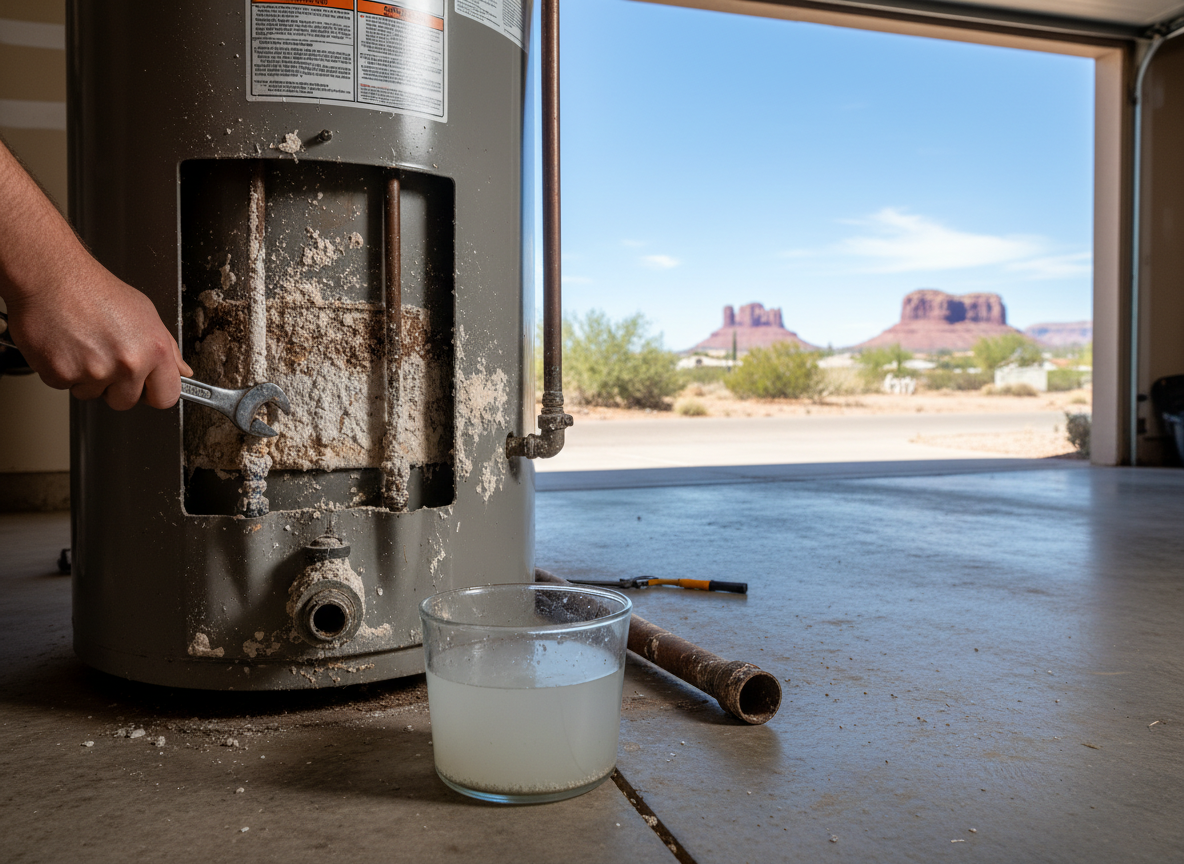
Hard water in Mesa leaves mineral deposits that reduce heat transfer and raise operating costs for standard tank units within a few years of installation. The hot desert climate with extreme summer heat speeds evaporation and concentrates dissolved minerals from the aquifer that serves Downtown Mesa, Red Mountain, and Superstition Springs.
How Mesa's Aquifer Creates Hard Water
Groundwater serving Maricopa County picks up calcium and magnesium as it moves through desert soils and fractured rock near the Superstition Mountains. Once winter temperatures drop and heating demand rises, these minerals precipitate faster inside the tank. Homes in older Downtown Mesa neighborhoods often have 40- to 50-gallon tanks installed decades ago that now show visible scale on heating elements. The same water chemistry reaches newer subdivisions near Superstition Springs, where tankless models also accumulate deposits on heat exchangers during peak summer use.
Visible Signs in Mesa Homes
Homeowners notice reduced hot water volume, longer recovery times after showers, and popping or rumbling sounds from sediment at the tank bottom. In Red Mountain properties with hard water lines, faucets and showerheads develop white crust that matches the scale forming inside the water heater. These symptoms appear earlier in units located in garages exposed to 110-degree afternoons, because heat accelerates mineral settling. Checking the drain valve for gritty discharge gives a quick field test before calling for water heater repair.
Effects on Tank and Tankless Models
Conventional tanks lose efficiency as scale insulates the burner or element, forcing longer run times and higher utility bills. Tankless systems in Tempe and Phoenix border areas suffer flow restriction when scale narrows the heat exchanger passages, triggering error codes during high-demand periods. Both types experience earlier corrosion once the protective anode is coated. Local conditions in Superstition Springs make annual flushing more important than in softer-water regions farther north.
Practical Steps for Local Homeowners
Flush the tank yearly by attaching a hose to the drain valve and running water until it runs clear, ideally before summer heat arrives. Install a point-of-use sediment filter on the cold inlet to slow new mineral entry. Monitor the temperature setting; keeping it at 120 degrees reduces scaling rate without sacrificing comfort. Residents in Downtown Mesa with older galvanized piping benefit from checking inlet screens on tankless units more often than the manufacturer interval suggests.
When flushing no longer restores performance, professional inspection becomes necessary. Hard water damage repair addresses the root mineral issue rather than repeated element replacements. For households considering a switch, the article Tankless Water Heater Repair in Mesa: Common Issues and Fixes outlines heat-exchanger cleaning specific to local water chemistry.
If hot water stops suddenly during a holiday weekend or late at night, emergency water heater repair remains available. Mesa Water Heater Repair provides 24/7 Emergency Service across Red Mountain and surrounding neighborhoods so homeowners avoid extended outages in extreme heat.